Pentecostal Outpourings, Stephen Jeffreys, Rees Howells & the Charismatic Renewal
The charismatic experience in 1 Corinthians 12, widely referred to as the Baptism of the Holy Spirit, accompanied by speaking in unknown tongues with interpretation, was manifested in the twentieth century at the Azusa Street Revival in Los Angeles, in 1906.
Similar manifestations later attended meetings in the British Isles at Sunderland in 1907, from which the first Pentecostal movement in Britain grew under the leadership of an Anglican vicar, Alexander Boddy. In subsequent annual meetings at the Sunderland Convention, Thomas Myerscough and Smith Wigglesworth entered into a deeper relationship with God.
Cecil Polhill, an original member of the Cambridge Seven, a group of seven Cambridge University graduates who served with Hudson Taylor as missionaries beginning their service in China in 1885, was greatly influenced and was baptised in the Holy Spirit in 1906. With renewed spiritual energy and vision Cecil Polhill and his friend Alexander Boddy, vicar of All Saints Parish Church, Monkwearmouth, Sunderland, England, similarly blessed, founded the Pentecostal Missionary Union and soon a Bible School was opened in Preston, with Thomas Myerscough as its leader.
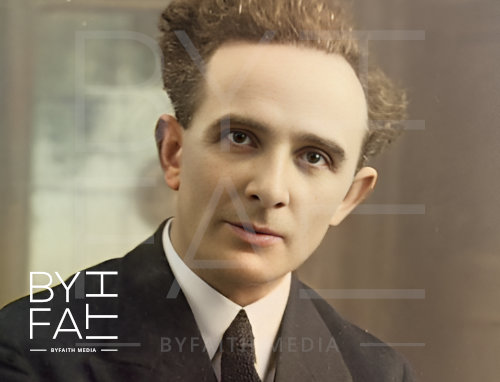
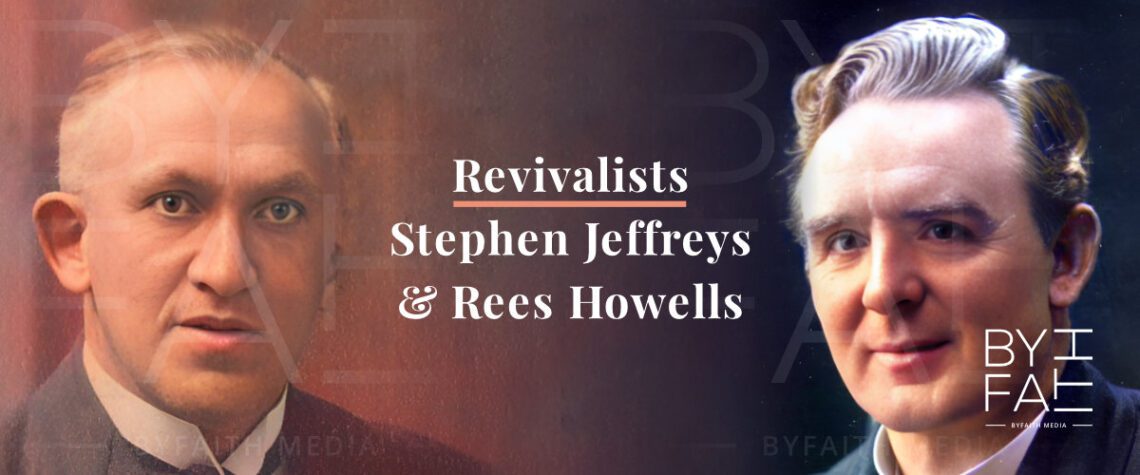
It was there that George Jeffreys, born at Maesteg in South Wales in 1889, and converted in the Welsh Revival (1904-1905) was prepared for ministry, alongside such great Pentecostal preachers and missionaries as W. P. Burton (who called himself the Tramp for God), James Salter, Percy Corry, Robert Darrah and E. J. Phillips. George Jeffreys exercised a very powerful ministry in Ireland. His brother, Stephen, began working in the local coal mine at the tender age of twelve, as did so many young men in South Wales at the turn of the nineteenth century.
Those long hard years put ‘steel into his bones’ which he later carried into his ministry. Stephen was converted at the age of twenty-eight, in the Welsh Revival in 1904, and soon wanted to preach. Although openly opposed to the new Pentecostal trends at first, he eventually sought seriously for the Baptism of the Holy Spirit. The Lord answered his prayers in a fuller way than he had ever anticipated, according to the promise of Luke 11:13:
If you then, though you are evil, know how to give good gifts to your children, how much more will your Father in Heaven give the Holy Spirit to those who ask Him
– Luke 11:13
Stephen’s life was dramatically changed. Holding meetings at Cwmtwch, at the head of the Swansea Valley in South Wales in 1913, 145 people were saved during a time of revival. He called for assistance from his brother George in Ireland and from then on, the pair conducted campaigns throughout Wales and eventually the whole of Britain.
Stephen’s ministry was renowned for its outstanding miracles of physical healing that demonstrated the power of the atonement. He had never sought such a ministry, but when a young lady, due to have her leg amputated, asked for prayer, he anointed her and prayed. The healing was dramatic, the first of many that focused people’s attention on Christ the Healer, and Stephen’s life principle became:
Pray – Preach – Persevere
– Stephen Jeffreys
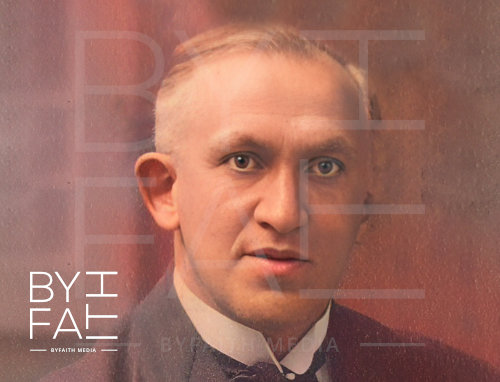
He poured his life into the work, earning the reputation of a fearless, tireless preacher. Following years of fruitful ministry when the spirit of healing flowed through him to thousands of people throughout the world, Stephen’s health eventually failed and he moved to Mumbles, Swansea (after the death of his wife in January 1941, to be cared for by his daughter, May), for the fresh air, as it seemed to many.
The Jeffreys’ brothers (Stephen and George) were the greatest evangelists in Britain since the days of John Wesley and George Whitefield of the eighteenth century
– Mathew Backholer, Revival Historian
Samuel Rees Howells recalled some Saturdays when he accompanied his father, Rees Howells, to the bungalow where Stephen Jeffreys was staying. Until then Stephen had never found liberty to pray for his own healing, but now he had called for Rees Howells to visit him, accompanied by Samuel, and told him on 11 October 1943:
I would like to be healed, and I came to Swansea to believe, and I believe you can help me.
– Stephen Jeffreys to Rees Howells
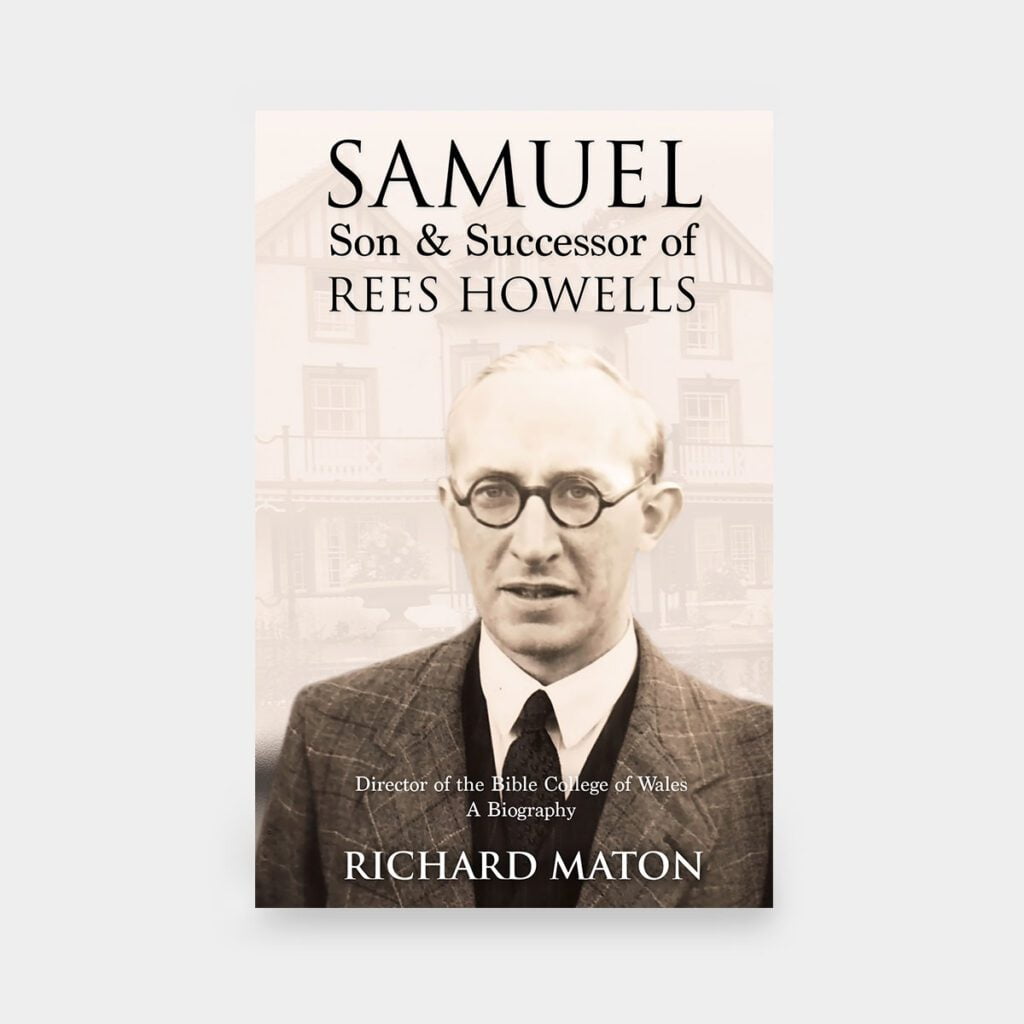
These and other similar words of Stephen Jeffreys are recorded in notes of Rees Howells’ meetings taken in October 1943. Stephen had swayed congregations of thousands for thirty years and here he was in Swansea seeking healing. For many years, Samuel had admired Stephen’s fruitful ministry and would often refer to it when he preached himself. Samuel was firmly convinced that one day there would be a wave of healing across the world similar to when the power flowed through Jesus during His Galilean ministry. To meet Stephen personally in Mumbles was such a great honour, but it was sad to see him so disabled and helpless.
Rees Howells appreciated that Stephen Jeffreys was a born evangelist and if the Holy Spirit came into Stephen’s life in the profound way that had changed Rees’ own life, Stephen would not only be healed, but would be transported into a completely different spiritual dimension, and into moment-by-moment communion with the living God. As Rees Howells said in his unpublished autobiography (which was used by Norman Grubb and staff of the Bible College of Wales to help write the first twenty chapters of Rees Howells Intercessor):
It was nothing less than a new creation. The feeling I had was, He brought me to the banqueting house, and His banner over me was love. Song of Solomon 2:4. It is impossible to describe the floods of joy that followed. Another Person came into my body and transported me into the realm where God is
– Rees Howells
It is difficult to convey in words to the reader the depth of fellowship that Rees Howells enjoyed with God, but those who were his contemporaries spoke of someone who had known an experience similar to Isaiah’s in the Temple, as in Isaiah 6, yet was so natural and human. This level of fellowship transcended by far the charismatic experiences and giftings that the Holy Spirit was already exercising through men like the Jeffreys’ brothers, Stephen and George, and others. Rees Howells realised that the whole of Swansea would be moved if Stephen was similarly blessed, and that blessing would send ripples round the world. Stephen had once said that the world needs a new revelation of Christ who is the same today as ever He has been, and Rees Howells’ desire was that Stephen would become one of the Holy Spirit’s instruments to convey that revelation.
To see God work in answer to his prayers had been a personal challenge to Rees Howells, who was constantly convicted by the life of Moses, the first Old Testament character to perform miracles in the Lord’s Name. However, he had learnt to pray only prayers given by the Holy Spirit. In this case, he talked and prayed with Stephen so that he could be led to experience the transforming infilling that would be necessary to deal with the powerful demonic forces which had stifled his ministry through infirmity. Only the Holy Spirit could do that. Rees Howells had waited for the Lord to speak, but the Word did not come and Stephen died in Swansea on 17 November 1943. Samuel was learning all the time, as a young man in his early 30s, being prepared for similar tests as the future Director of the Bible College of Wales.
Edward Jeffreys, son of Stephen, praised Rees Howells and his team of doctors and nurses at Bible College of Wales who attended to his dad during his last illness at Mumbles as recorded in Stephen Jeffreys – The Beloved Evangelist (1946)
– Mathew Backholer, Revival Historian
The essential feature of Rees Howells’ ministry was that the Holy Spirit is a Person, the Third Person of the Godhead, who had been operating on earth since its foundation. Using these resources gained through the atonement, which also acted retrospectively, He had taken full control of individuals for certain Divine interventions in the history of the Jewish nation, as recorded in the Scriptures (e.g. Othniel, Judges 3:10; Gideon, Judges 6:34; Jephthah, Judges 11:29 and Saul, 1 Samuel 10:6).
He witnessed and regulated every facet of Jesus’ life and final walk to Jerusalem, culminating in the crucifixion. He empowered Jesus to rise triumphantly from death on the third day and indwelt believers after the ascension (Romans 8:11). The Holy Spirit then became responsible for completing God’s work on earth and the fulfilment of all the prophecies concerning the end times. In a short autobiographical (unpublished) booklet, Rees Howells reminded his readers that when the disciples met the risen Saviour:
They worshipped Him and returned to Jerusalem with great joy (Luke 24:52). These men had joy before they had power, so joy in that case was not proof of power. They had this joy when they were waiting for the power from on high – the Holy Spirit (Luke 24:49)
– Rees Howells
That had been the state of the Church after the Welsh Revival (1904-1905). They had much joy in the risen Lord, but at the same time, they felt the lack of power for service. This was the ‘silver thread’ of revelation that Samuel had received. Unless the Holy Spirit was permitted to deal with an individual’s nature and replace it with Divine Nature, then there would be problems. In referring to the lengths that Judas went to in his betrayal of Jesus, Samuel said, “It only shows the extent of the corruption of human nature.” In Jeremiah 17:9 it is clearly stated:
The heart is deceitful above all things and beyond cure. Who can understand it?
– Jeremiah 17:9
Another often divisive yet biblical issue that emerged in the 1970s, and which passed through various phases was the Charismatic Renewal throughout Britain. Staff and students had varying church backgrounds and all visiting speakers were welcome in the pulpit. Occasionally in services, a message would be given in tongues with interpretation, and there were healings. Samuel Rees Howells at times pronounced a prophetic word, often concerning national issues (as had his dad, Rees Howells and other members of staff). When very unwell he would call the ‘elders’ up to his room for prayer for healing, and the Lord would touch him afresh.
Several of the former students such as Bryn and Keri Jones (brothers) and Alan Scotland (successor to Samuel Rees Howells as Director of the Bible College of Wales from 2002) were associated with emerging leadership in these circles in the UK, so Samuel prayed earnestly for each one, recognising the pitfalls that they faced. In some instances, the movement was bringing great disservice to the Christian testimony. Samuel pondered over these developments in the Christian Church and sought to know how to pray for those involved.
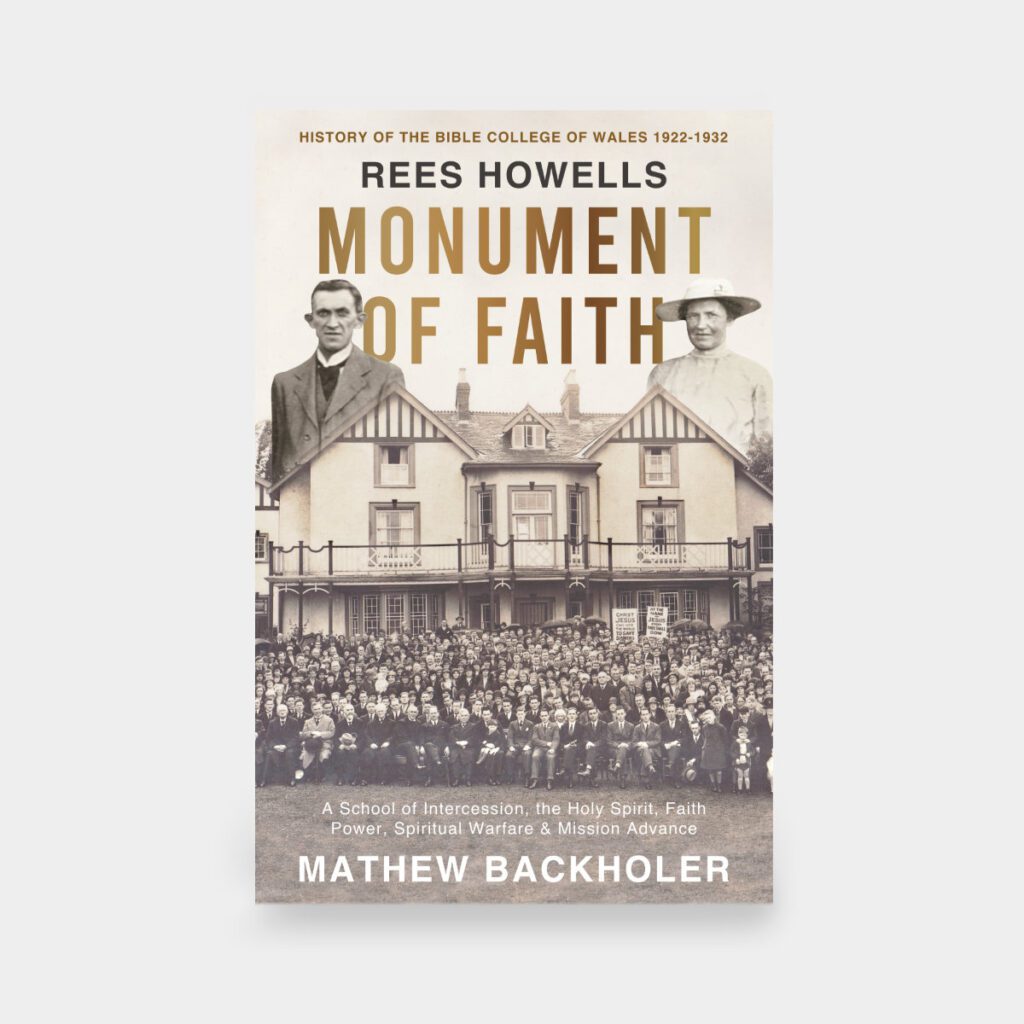
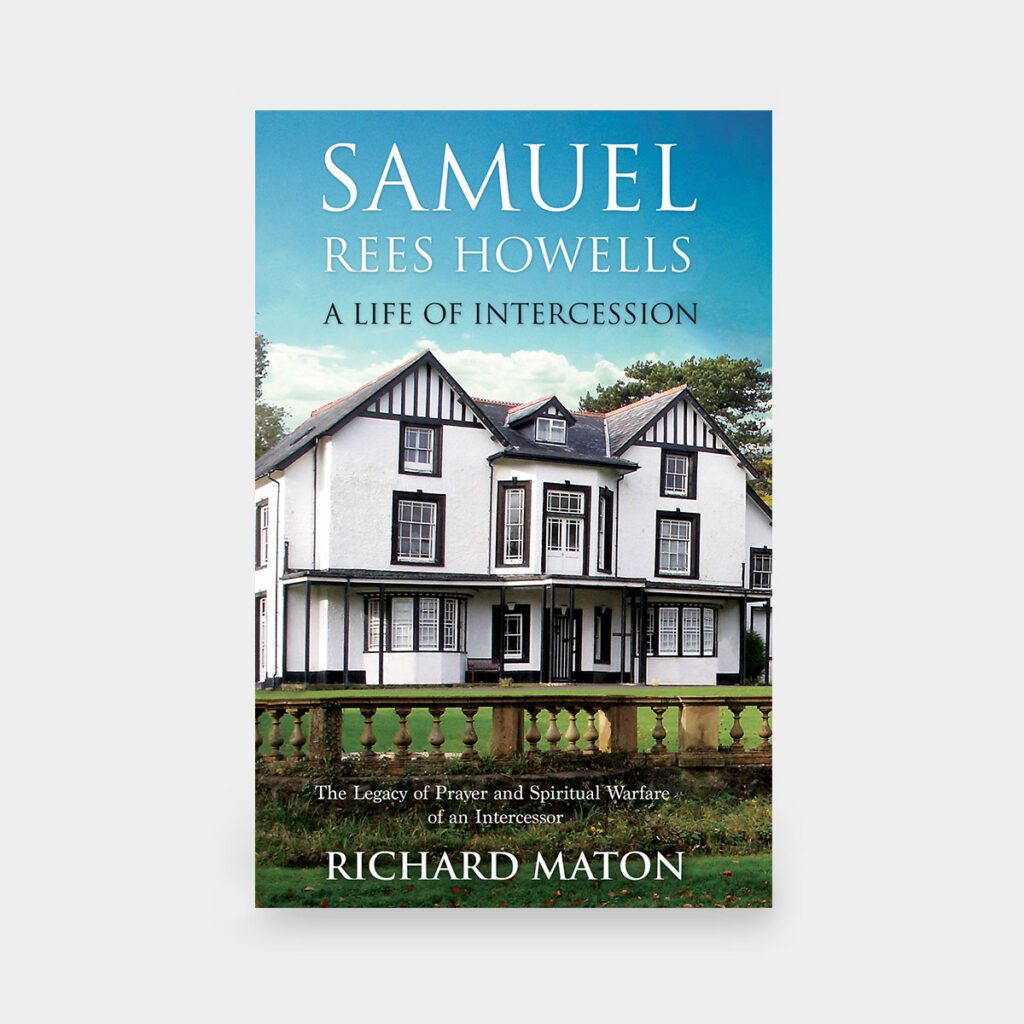
There were many casualties in the developing House Church Movement of the 1970s, as giftings were sometimes expressed through unchanged natures. So, without placing any restriction on the private exercising of the gifts of the Holy Spirit, which he had no authority to do, Samuel Rees Howells did express his wish, publicly and privately to some staff members (of the Bible College of Wales) who had been blessed through charismatic experiences, that the main College services should be focused around the intercessory ministry which was continuing all the time.
Repeating truths he had heard from Rees Howells, Samuel stated that to step into the realm of intercession was as different as an unbeliever stepping from darkness into the Kingdom via the gateway of the new birth. As with everything spiritual, it comes by way of revelation. In sharing his heart privately, he referred to his views in this way. “Sermons are very good,” he would say, “but they do not touch the nature.”
Eagerly desire the greater gifts. And now I will show you the most excellent way
– 1 Corinthians 12:31
Even though you have ten thousand guardians in Christ, you do not have many fathers, for in Christ Jesus I became your father through the Gospel. Therefore I urge you to imitate me
– 1 Corinthians 4:15-16
Samuel would add, “It is fathers the Church needs.” His aim, as his handwriting so eloquently indicated, was to reach upward and to believe for the “greater works.”
Most assuredly, I say to you, he who believes in Me, the works that I do he will do also; and greater works than these he will do, because I go to My Father
– John 14:12
Occasionally, in Samuel’s ministry, deep truths were spoken. One such occasion was in the Thursday evening meeting of 2 June 1955, when Samuel was considering the passages in John 6 where Jesus proclaimed Himself to be the Bread of Life.
A young man standing before them and saying, ‘I am the Bread of Life.’ They could not take that without a revelation. The whole world was to be satisfied with His Body. He was Life. Have we come to the position where we never hunger or thirst? Do we day by day feed on Him? Has He satisfied us? Ever since last Saturday afternoon, that company on Mount Zion who have followed Him all the way have been in my mind. Those who do not want any relationship but Himself. It is not anything ordinary. It fills our minds, our affections, which have been absorbed in His Person. He becomes all in all
– Samuel Rees Howells
Samuel Rees Howells expressed an opinion that many of the early Church fathers had found their all-in-all in Christ. He recounted the life of Ignatius, at the turn of the first century AD, the Bishop of Antioch who lived a singular life to the Lord.
His one passion was to be conformed to the image of the Lord (Romans 8:29). He was a martyr and more than a martyr. Some of those will be among that company. Has the Lord set a higher standard for them and a lower standard for us? We want this to become real – that He is the centre of attraction in our lives. I do long that all of you will enter this now. Christ is the Bread of Life – feed on Him daily
– Samuel Rees Howells
It was always clear to Samuel, that for people to become part of the Bride to the Saviour, He must become all in all to them. It is a position gained only through the process of death to the self-life. Unless that process is worked out in practical living, they can only claim that position falsely. A deep and solemn silence would pervade meetings whenever Samuel touched on the life of Esau, who sold his birthright so cheaply (Genesis 25:29-34). The Holy Spirit will never fully take His rightful place in a person’s life unless that individual has ‘died.’
Used with permission from Samuel, Son and Successor of Rees Howells by Richard Maton and edited by Mathew Backholer.
Find out about Rees Howells’ books here.